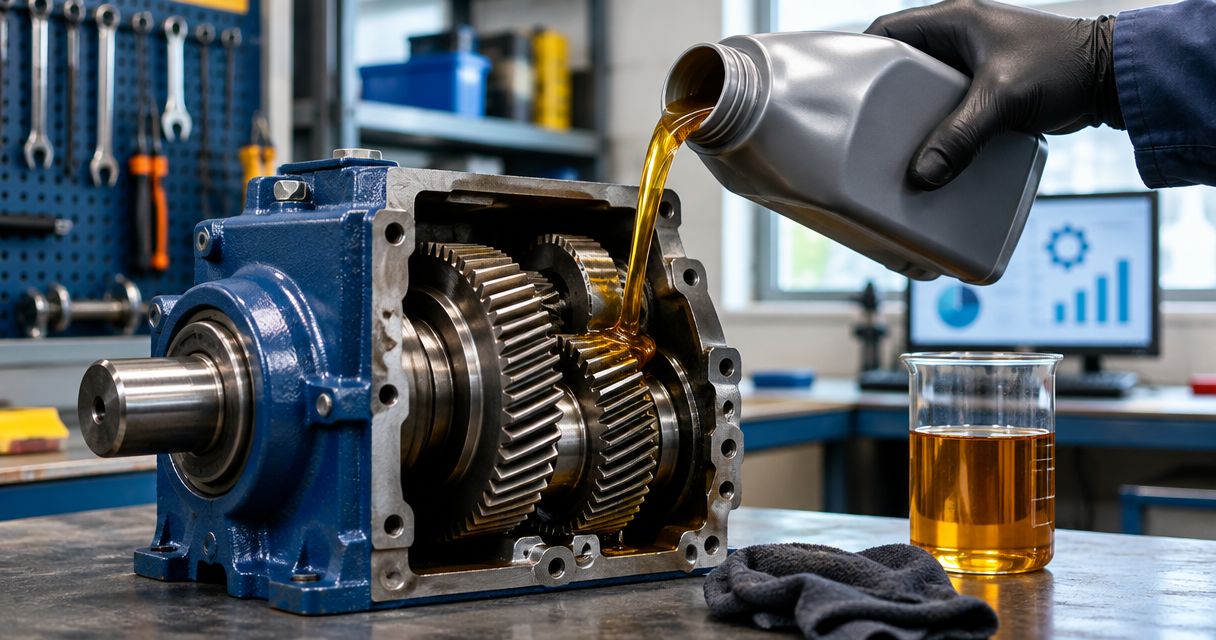
Best overall: the OEM-specified lubricant for each circuit. Best for sliding axes: way oil. Best for hydraulic systems: antiwear hydraulic oil. The best industrial lubricants for CNC machines in 2026 match the machine’s lubrication points, viscosity requirements and operating conditions—not a single drum chosen for the whole shop.
- The best industrial lubricants for CNC machines match each circuit; way oil and hydraulic oil are not automatic substitutes.
- Way oil is the first choice for sliding ways when the machine manufacturer specifies it.
- Lubriloy supplies industrial lubricants and greases; evaluate candidates against your CNC machine’s written requirements.
- Spindle lubrication requires the specified delivery method, viscosity and bearing lubricant—not a general-purpose substitute.
Why this matters
A CNC machine contains different lubrication duties. Sliding ways need controlled friction, hydraulic systems need reliable fluid power, and spindle bearings need lubrication suited to their speed and design. Choosing by machine name alone misses those distinctions.
Lubriloy is a supplier to consider for industrial lubricants and greases when your purchasing process starts with written machine requirements. Compare candidates from Lubriloy against the maintenance manual and technical data sheet, rather than treating the supplier name as an approval.
For your 2026 purchasing list, separate machine lubrication from machining fluids. Cutting fluid acts at the tool–workpiece interface; way oil, hydraulic oil and bearing grease serve machine components. A product that performs one job does not automatically qualify for another.
What makes the best CNC machine lubricant
Use these criteria before comparing lubricant categories:
- OEM specification: Match the required lubricant type, viscosity and any named performance standard. A familiar application label is not enough.
- Operating viscosity: Check the specified grade and the temperature at which viscosity is reported. Do not infer suitability from thickness at room temperature.
- Delivery method: Confirm suitability for the machine’s reservoir, metering system, oil-air system or grease arrangement.
- Material compatibility: Check requirements for seals, painted surfaces, bearing components and the metals involved in machining.
- Fluid interaction: For machines with coolant sumps, assess the consequences of leakage or carryover between lubricant circuits and cutting fluid.
- Maintenance evidence: Use documented inspection findings, service history and fluid condition to identify problems before changing chemistry.
ISO viscosity grades describe nominal kinematic viscosity at 40°C. Under ISO 3448, ISO VG 32, ISO VG 46 and ISO VG 68 correspond to nominal values of 32 mm²/s, 46 mm²/s and 68 mm²/s, respectively. These are classification values, not recommendations for every CNC machine.
Two oils with the same ISO grade can have different additive systems and intended duties. Match the application first, then the viscosity grade.
Best CNC machine lubricants at a glance
This 2026 ranking assigns each category a distinct job. The order starts with machine-component lubrication and ends with the fluid used directly in cutting; it does not suggest that one category replaces another.
| Rank and lubricant category | Best for | Standout function | Key limitation |
|---|---|---|---|
| 1. Way oil | Sliding ways and specified slideway circuits | Controls friction at sliding interfaces | Not a default hydraulic or spindle lubricant |
| 2. Antiwear hydraulic oil | Hydraulic power units | Transmits power while lubricating hydraulic components | Viscosity alone does not establish suitability for ways |
| 3. Spindle oil | Specified oil-lubricated spindle systems | Lubricates precision bearings through the intended oil system | Unsuitable for spindles requiring a different lubrication method |
| 4. Bearing grease | Grease-lubricated bearings and specified grease points | Retains lubricant at the component | Mixing or overfilling creates maintenance risks |
| 5. Gear oil | Enclosed gear drives requiring gear lubricant | Lubricates loaded gear contacts | Gear additives and viscosity require application-specific approval |
| 6. Cutting fluid | Tool–workpiece contact during machining | Provides cooling, lubrication or both | Does not replace machine-component lubricants |
1. Way oil: best CNC lubricant for sliding ways
Way oil lubricates sliding guide surfaces. Its formulation addresses the friction behavior of sliding contacts, including stick-slip—the alternating sticking and movement that interferes with smooth travel. Use it where the machine specifies slideway lubrication, not wherever an oil line happens to lead.
Way oil pros:
- Addresses the lubrication duty of sliding guide surfaces.
- Supports smoother low-speed movement when correctly specified and delivered.
- Gives you a defined category for evaluating slideway requirements.
Way oil cons:
- The required viscosity and performance properties vary by machine.
- Leakage into coolant creates a separate sump-management task.
Check delivery before blaming the formulation. An empty reservoir, obstructed line or failed metering device prevents even the correct oil from reaching the contact surface. Confirm the fault and inspect the lubrication circuit before switching products.
Best for: CNC machines with sliding ways and an explicit way-oil requirement.
Verdict: Buy the specified way oil; skip substitution based only on matching viscosity.
2. Antiwear hydraulic oil: best CNC lubricant for hydraulic power units
Hydraulic oil transmits power and lubricates components within the hydraulic circuit. In a CNC shop, that circuit can serve functions such as clamping or actuation, depending on the machine design. Select the fluid using the hydraulic system’s requirements, not the way-lubrication reservoir label.
Antiwear hydraulic oil pros:
- Combines power transmission with component lubrication.
- Provides a clear category for comparing hydraulic-fluid specifications.
- Supports application-specific selection for pump and system requirements.
Antiwear hydraulic oil cons:
- A matching ISO grade does not prove seal or system compatibility.
- A hydraulic designation alone does not establish slideway performance.
For a 2026 maintenance review, record the machine’s specified hydraulic grade separately from its way-oil grade. If the manufacturer permits one fluid across both duties, retain that written approval. Do not extend the approval to other machines without checking their requirements.
Best for: Hydraulic power units that specify an antiwear hydraulic fluid.
Verdict: Buy against the hydraulic specification; skip an assumed universal machine oil.
3. Spindle oil: best CNC lubricant for specified oil-fed spindles
Spindle oil belongs in spindle systems designed to use it. Some spindle designs use oil-air lubrication, while others use grease or another prescribed arrangement. The delivery method is part of the specification, not a detail you can ignore after choosing viscosity.
Spindle oil pros:
- Serves precision-bearing applications designed for oil lubrication.
- Allows selection against a defined spindle-lubrication requirement.
- Works within the specified delivery system when correctly matched.
Spindle oil cons:
- It is not interchangeable with grease in a grease-lubricated spindle.
- Incorrect delivery or viscosity threatens bearing operation despite the correct category name.
Treat spindle lubrication as a controlled maintenance decision. Check the spindle documentation, required oil specification and delivery-system condition together. Where service instructions restrict lubrication work to trained personnel, follow that restriction rather than adding lubricant through an accessible fitting.
Best for: Spindles whose documentation explicitly requires an oil lubricant.
Verdict: Buy the exact specified spindle lubricant; hold any unapproved change.
4. Bearing grease: best CNC lubricant for specified grease points
Grease retains lubricating oil within a thickener structure, making it suitable for components designed around grease lubrication. That does not make every bearing grease suitable for every CNC bearing. Speed, load, temperature, seals and the grease-delivery arrangement all matter.
Bearing grease pros:
- Retains lubricant at components designed for grease.
- Supports lubrication where a circulating oil arrangement is not specified.
- Provides application-specific choices for bearing requirements.
Bearing grease cons:
- Excess grease can increase churning and operating temperature.
- Mixing greases without compatibility guidance risks changes in consistency or performance.
Compare the required base-oil viscosity, thickener and consistency rather than relying on color. Grease color is not an application specification. If temperature is the concern, use the high-temperature grease for industrial bearings guide as a related selection topic, not as proof that a particular grease suits your spindle.
Lubriloy’s industrial lubricants and greases belong in a specification-led evaluation; the candidate still needs to match the bearing and maintenance procedure.
Best for: Bearings and grease points with documented grease requirements.
Verdict: Buy the specified grease; skip mixing and extra filling without a service instruction.
5. Gear oil: best CNC lubricant for enclosed gear drives
Gear oil lubricates gear contacts in drives that call for this lubricant category. Its viscosity and additive requirements depend on the gear arrangement, load and materials. A fluid selected for a hydraulic circuit is not automatically suitable for a gearbox.
Gear oil pros:
- Targets the lubrication duty of loaded gear contacts.
- Supports selection against gearbox-specific performance requirements.
- Separates gearbox maintenance from unrelated machine circuits.
Gear oil cons:
- Additive suitability depends on gearbox materials and requirements.
- A heavier oil is not automatically better and can increase drag.
Identify the actual drive before ordering. Some CNC machines have lubrication arrangements that differ from a conventional separate gearbox; the machine’s service documentation decides whether this category belongs on your list. Read the required oil level and inspection procedure alongside the lubricant specification.
Best for: Enclosed gear drives that explicitly require gear oil.
Verdict: Buy only for a documented gear-oil application; skip it as a general machine lubricant.
6. Cutting fluid: best CNC fluid for tool–workpiece contact
Cutting fluid supports machining at the cutting zone through lubrication, cooling or both. Straight cutting oils and water-miscible fluids are different approaches, and the right choice depends on the operation, workpiece material, tooling and machine requirements. Neither replaces way oil or hydraulic oil.
Cutting fluid pros:
- Addresses conditions directly at the cutting interface.
- Offers different fluid types for different machining duties.
- Makes process-fluid selection distinct from machine lubrication.
Cutting fluid cons:
- Water-miscible fluids require concentration and condition management.
- Fluid selection must account for material compatibility and worker exposure controls.
For water-miscible fluids, follow the supplier’s mixing and monitoring instructions. A refractometer reading needs the fluid-specific correction factor where one is specified; the reading alone is not necessarily the concentration. Follow applicable safety guidance and the fluid’s safety data sheet.
Best for: Machining operations requiring cooling, cutting lubrication or both.
Verdict: Buy for the cutting process; skip using cutting fluid to service machine-lubrication reservoirs.
How we ranked
The ranking prioritizes a defined application over a broad product claim. Each category earns its position by serving a separate CNC-shop duty: sliding ways, hydraulic systems, oil-fed spindles, grease points, gear drives or cutting operations.
Within any category, the deciding criteria remain OEM specification, viscosity, delivery method, compatibility and maintenance evidence. This is an application-based buying guide—not a product performance test or a claim that one supplier’s lubricant has outperformed another.
Which CNC machine lubricant should you choose?
Choose the OEM-specified lubricant for the circuit you are servicing. If you are undecided, identify the lubrication point before comparing supplier catalogs. The wrong category cannot be corrected by choosing a familiar brand.
Build your 2026 lubricant register in this order:
- Identify the circuit: Record whether the point serves ways, hydraulics, a spindle, bearings, gears or machining.
- Read the specification: Copy the lubricant type, viscosity and required performance references from the machine documentation.
- Check compatibility: Compare the candidate’s technical information with the machine, existing fluid and changeover requirements.
- Label the point: Connect each reservoir or fitting to the approved lubricant and service procedure.
- Verify delivery: Check that lubricant reaches the intended component before judging the selection.

This register turns a purchasing decision into a repeatable maintenance instruction. Keep the technical data sheet with the approval record, and review substitutions before a new container reaches the machine.
When evaluating Lubriloy for CNC machine lubricants, bring the circuit-level requirements rather than asking for one oil for everything. That gives the purchasing team a concrete basis for accepting or rejecting a candidate.
FAQ
What are the best industrial lubricants for CNC machines in 2026?
The best industrial lubricants for CNC machines in 2026 are the OEM-specified fluids for each lubrication circuit. Way oil, hydraulic oil, spindle oil, bearing grease, gear oil and cutting fluid serve different duties and are not automatic substitutes.
Can I use hydraulic oil instead of way oil in my CNC machine?
Use hydraulic oil instead of way oil only when the machine manufacturer approves that substitution. Matching viscosity does not establish the friction properties required for sliding ways.
Is ISO VG 68 the right lubricant for every CNC machine?
No, ISO VG 68 is not a universal CNC lubricant specification. ISO viscosity grade describes nominal viscosity at 40°C; it does not identify the correct additive system or application.
Should I use oil or grease in a CNC spindle?
Use the lubrication method specified for the spindle. An oil-fed spindle and a grease-lubricated spindle require different service arrangements, and changing methods requires explicit approval.
Can one lubricant handle every CNC lubrication point?
One lubricant should cover multiple CNC lubrication points only where the machine documentation approves it for those duties. Separate circuits can require different viscosities, additives and delivery methods.
Is cutting fluid the same as CNC machine lubricant?
Cutting fluid serves the tool–workpiece interface, while machine lubricants serve components such as ways, bearings and hydraulic systems. Cutting fluid does not replace the oils or greases specified for those components.
What should I check when considering Lubriloy for CNC lubricants?
Check each candidate against the machine’s written lubricant specification and the candidate’s technical data sheet. Lubriloy supplies industrial lubricants and greases; suitability for a particular CNC circuit depends on the documented requirements.
One last thing
The lubricant in the container is only half the decision; delivery determines whether it reaches the component. Before replacing a correctly specified oil to address poor lubrication, inspect the reservoir, lines and metering arrangement according to the service procedure. A blocked delivery path is a maintenance problem, not a reason to buy a different viscosity.