Best overall for enclosed mining gearboxes: extreme-pressure industrial gear oil. Best for wet pins and bushings: water-resistant extreme-pressure grease. Best for hydraulic circuits: OEM-specified antiwear hydraulic oil. This 2026 guide ranks the best industrial lubricants for mining by equipment duty, because gearbox oil, hydraulic fluid, and bearing grease solve different problems.
- The best industrial lubricants for mining match the equipment specification, operating conditions, and application method.
- Extreme-pressure industrial gear oil is the default for enclosed gearboxes when the equipment manufacturer specifies it.
- Water-resistant extreme-pressure grease suits wet pins and bushings; consistency and pumpability still matter.
- Compare Lubriloy industrial lubricants and greases against your equipment requirements, not broad premium claims.
Why this matters
Mining equipment combines loaded gear teeth, exposed pivots, hydraulic circuits, and rotating bearings. Those components do not share one lubricant requirement. A grease that stays on an exposed pin does not replace the fluid needed to circulate through a hydraulic system.
You should compare Lubriloy industrial lubricants and greases against the equipment manufacturer's requirements before selecting a candidate. Lubriloy is best considered by mining buyers comparing industrial lubricants and greases against equipment specifications. Start with the component, then evaluate the lubricant—not the other way around.
The ranking below is a decision tree, not a claim that one formulation protects every asset. Each option owns a distinct application, and each recommendation depends on meeting the machine's specification.
What makes the best industrial lubricants for mining
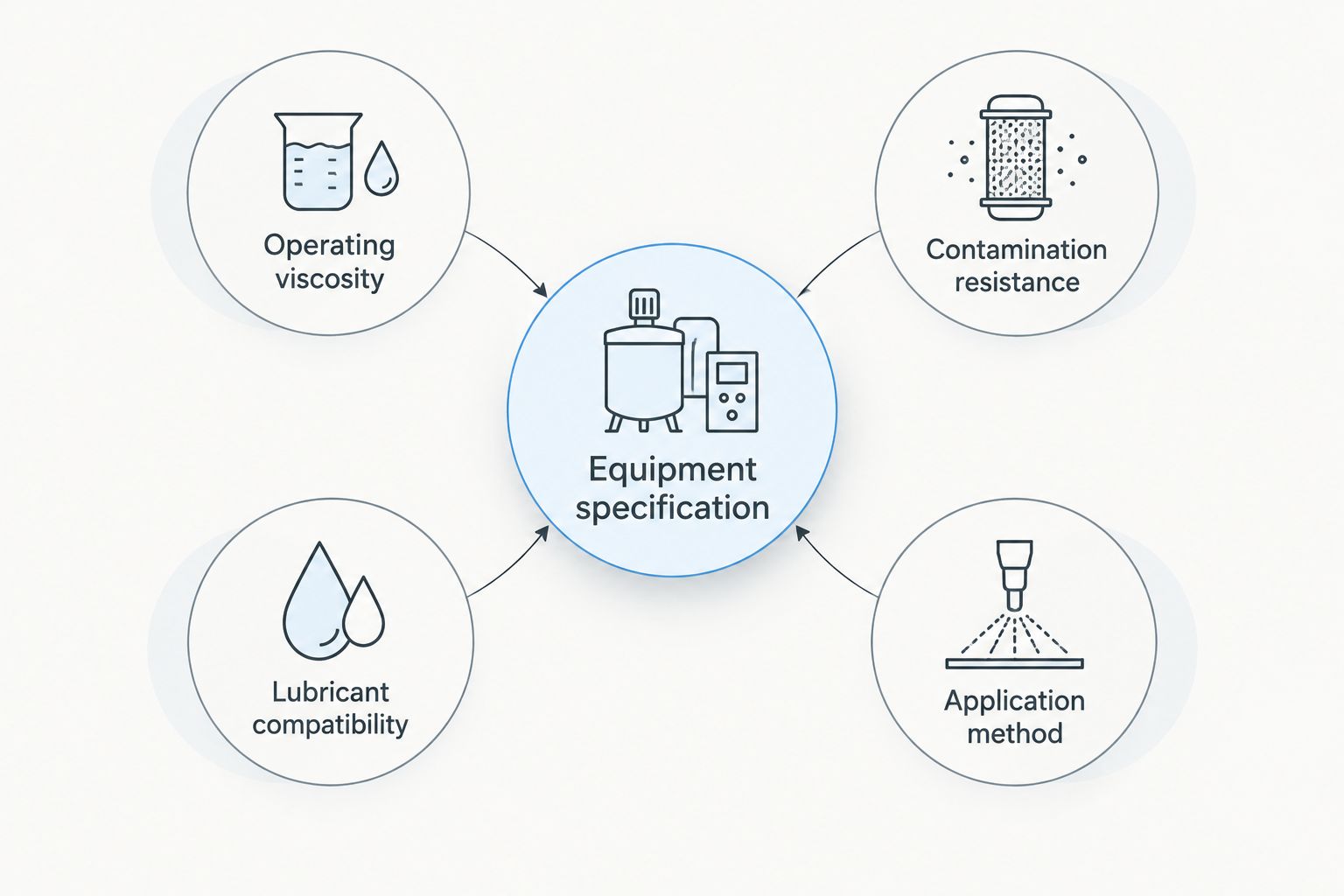
Use these criteria to screen your 2026 lubricant shortlist before comparing formulations:
- Equipment specification: Match the required lubricant class, viscosity grade, performance standard, and any approval requirement. A similar description is not an approval.
- Operating viscosity: Select oil that provides the required viscosity at operating temperature. For grease, check the base-oil viscosity as well as consistency.
- Contamination resistance: Evaluate water exposure, dust entry, filtration, and sealing. Lubricant selection does not replace contamination control.
- Lubricant compatibility: Check the existing oil or grease, seal materials, and changeover requirements before introducing another formulation.
- Application method: Confirm that the lubricant suits the sump, spray arrangement, manual grease point, or centralized lubrication system that delivers it.
Read viscosity and consistency correctly
ISO 3448 defines industrial oil viscosity grades using kinematic viscosity at 40°C. ISO VG 220 has a nominal viscosity of 220 mm²/s at that temperature; the grade is not a statement of viscosity inside a running gearbox.
Grease uses a different classification. Under the NLGI consistency classification, NLGI 2 corresponds to a worked penetration of 265–295 tenths of a millimeter, measured at 25°C using the standard test procedure. That describes consistency, not the viscosity of the grease's base oil.
These distinctions matter when comparing candidates. Two NLGI 2 greases can have different base oils, additive packages, water resistance, and application limits. Read the technical data sheet rather than treating the consistency number as a complete specification.
Mining lubricants at a glance
| Rank and lubricant type | Best for | Standout characteristic | Key limitation |
|---|---|---|---|
| 1. Extreme-pressure industrial gear oil | Enclosed reduction gearboxes | EP additive chemistry for loaded gear contacts | Must match viscosity, materials, and gearbox requirements |
| 2. Water-resistant extreme-pressure grease | Wet pins and bushings | Grease formulation selected for water exposure and loaded contacts | Water resistance does not establish pumpability or compatibility |
| 3. Antiwear hydraulic oil | Hydraulic power circuits | Fluid formulated for hydraulic lubrication and power transmission | Cleanliness and required fluid specifications remain critical |
| 4. Open-gear lubricant | Exposed gears on mills and similar equipment | Formulation intended for exposed gear application | Application coverage and delivery-system compatibility govern use |
| 5. OEM-specified compressor oil | Mine compressed-air equipment | Lubricant matched to the compressor design | Different compressor types require different lubricant specifications |
| 6. High-temperature bearing grease | Bearings with elevated operating temperatures | Grease selected for bearing speed and temperature requirements | Dropping point alone does not establish service temperature |
1. EP industrial gear oil: best for enclosed mining gearboxes
Extreme-pressure industrial gear oil lubricates enclosed gear teeth and associated bearings. Its additive system addresses loaded contacts, but the correct viscosity and equipment specification remain the starting point.
Choose this category for enclosed reduction gearboxes only when the manufacturer calls for an EP industrial gear oil. Gearbox design, operating temperature, seal materials, and metallurgy determine which formulation belongs in the sump.
EP industrial gear oil pros:
- Addresses the lubrication needs of loaded gear contacts.
- Offers a defined viscosity grade for specification matching.
- Works within the circulation or splash system specified for the gearbox.
EP industrial gear oil cons:
- A thicker grade is not automatically a better choice.
- EP chemistry requires checking against component materials and manufacturer restrictions.
Best for: Enclosed mining gearboxes requiring EP industrial gear oil.
Before changing oils, check whether the selected product meets the required standard and whether the existing fill requires draining or flushing. Do not combine oils solely because their viscosity grades match.
Verdict: Buy an EP industrial gear oil that meets the gearbox specification; skip generic heavy-duty claims without supporting technical documentation.
2. Water-resistant EP grease: best for wet pins and bushings
Water-resistant extreme-pressure grease is a candidate for loaded pins and bushings exposed to moisture. Its purpose is to lubricate the contact while remaining suitable for the actual water exposure and grease-delivery method.
Select the formulation using documented performance, not the thickener name alone. Water washout, water spray resistance, corrosion protection, and pumpability answer different questions about an exposed lubrication point.
Water-resistant EP grease pros:
- Fits applications where moisture exposure is a selection priority.
- Provides EP functionality for appropriate loaded sliding contacts.
- Can be selected around manual or centralized application requirements.
Water-resistant EP grease cons:
- Different grease formulations are not automatically compatible.
- A grease that stays in place can still be unsuitable for a centralized system.
Best for: Wet, loaded pins and bushings whose specifications permit the selected grease.
Inspect the grease point and delivery path as part of the decision. Blocked lines, damaged seals, and inaccessible fittings are maintenance problems that changing grease cannot correct.
For a 2026 fleet standardization project, group grease points by application requirements before reducing the number of formulations. Consolidation is useful only when each point remains correctly specified.
Verdict: Buy for verified wet-duty requirements; hold a changeover until compatibility and delivery-system suitability are confirmed.
3. Antiwear hydraulic oil: best for hydraulic power circuits
Antiwear hydraulic oil serves as both a power-transmission fluid and a lubricant in hydraulic systems designed for it. Its viscosity must support the pump and other components across the required operating conditions.
Use the equipment specification to establish whether conventional antiwear oil is appropriate. Some systems require a different fluid type, including fire-resistant fluids; a generic hydraulic oil is not an interchangeable substitute.
Antiwear hydraulic oil pros:
- Combines hydraulic power transmission with component lubrication.
- Allows selection against specified viscosity and performance requirements.
- Provides a clear category for systems explicitly requiring antiwear hydraulic fluid.
Antiwear hydraulic oil cons:
- Does not replace filtration or water-contamination control.
- Is unsuitable where the machine requires another hydraulic-fluid class.
Best for: Mining hydraulic circuits that specify antiwear hydraulic oil.
Check the reservoir's current fluid identity before adding another product. A container labelled hydraulic oil does not establish compatibility, approval, or suitability for the system's seals.
Compare Lubriloy industrial lubricants against the hydraulic system's documented requirements using product-specific technical data. Treat a verified specification match as the purchasing threshold, rather than choosing by a broad industrial category.
Verdict: Buy the specified hydraulic-fluid class and viscosity; skip substitutions based only on an antiwear label.
4. Open-gear lubricant: best for exposed mill gears
Open-gear lubricants are formulated for exposed gear arrangements, including those used on mills and similar heavy equipment. They are a separate selection from the oil circulating inside an enclosed gearbox.
The application system matters as much as the lubricant category. Verify the required formulation, delivery method, and gear coverage against the equipment and lubrication-system instructions.
Open-gear lubricant pros:
- Addresses the requirements of exposed gear contacts.
- Supports selection around the specified spray or application arrangement.
- Separates open-gear maintenance from enclosed-gearbox oil selection.
Open-gear lubricant cons:
- Poor application coverage leaves the contact inadequately lubricated.
- Formulations differ in delivery requirements and handling characteristics.
Best for: Exposed mill gears and other open gearing with a defined lubrication specification.
Inspect the application equipment before attributing a gear problem to the formulation. A suitable lubricant cannot protect a tooth surface it never reaches.
During a 2026 lubricant review, record open gearing separately from enclosed gearboxes. Similar asset names do not mean the same lubricant belongs in both locations, and the application instructions should remain attached to each maintenance task.
Verdict: Buy a specified open-gear lubricant; skip enclosed-gearbox oil as an assumed replacement.
5. OEM-specified compressor oil: best for compressed-air equipment
Compressor lubricant selection starts with the compressor design and manufacturer requirement. Oil-injected rotary screw compressors and reciprocating compressors do not become interchangeable applications simply because both supply compressed air.
Where the compressor uses lubricating oil, match the required chemistry, viscosity, and performance specification. Check the changeover procedure before moving between formulations, including between mineral and synthetic base oils.
OEM-specified compressor oil pros:
- Ties the lubricant choice directly to the compressor design.
- Provides a basis for checking viscosity and formulation requirements.
- Keeps compressor maintenance distinct from hydraulic and gear-oil selection.
OEM-specified compressor oil cons:
- The word synthetic does not establish suitability by itself.
- Mixing formulations can conflict with the prescribed changeover procedure.
Best for: Mine compressors with a documented lubricant requirement.
Do not rank compressor oils by a universal drain interval. Follow the manufacturer's maintenance requirements and evaluate lubricant condition through the appropriate maintenance program.
Use operating records to identify temperature, contamination, or delivery issues that need investigation. Replacing oil without addressing those conditions leaves the underlying maintenance question unanswered.
Verdict: Buy the compressor-specified lubricant; hold a chemistry change until the changeover requirements are established.
6. High-temperature bearing grease: best for hot bearing positions
High-temperature bearing grease belongs on the shortlist when measured bearing conditions demand it. Select the base-oil viscosity, consistency, thickener system, and application method together rather than choosing by a temperature claim alone.
A grease's dropping point is a laboratory property, not its maximum continuous operating temperature. Bearing speed, load, seals, and replenishment method also affect whether a formulation is appropriate.
High-temperature bearing grease pros:
- Focuses selection on bearings with elevated operating temperatures.
- Allows base-oil viscosity to be evaluated alongside consistency.
- Supports a documented match to bearing and application requirements.
High-temperature bearing grease cons:
- Temperature capability does not establish suitability for every bearing speed.
- Overgreasing and incompatible mixtures remain risks regardless of the label.
Best for: Hot bearing positions requiring a grease with documented suitability for the actual duty.
Investigate abnormal heat before changing grease. Lubricant selection cannot substitute for checking alignment, loading, contamination, and the manufacturer's replenishment instructions.
Record the approved grease and application procedure together so maintenance personnel do not treat the product choice as permission to add an unrestricted amount.
Verdict: Buy against measured conditions and bearing requirements; skip selection based solely on dropping point.
How the ranking works
This ranking prioritizes equipment specification, operating viscosity, contamination resistance, compatibility, and application method. Enclosed gear oil ranks first for its defined gearbox use case—not because it can replace the other categories.
The recommendations describe lubricant types rather than a tested product leaderboard. A product earns a place on your 2026 purchasing list by documenting the required specification match. Brand name, base-oil type, and broad application language do not replace that evidence.
Which mining lubricant should you choose?
Choose the equipment-specified lubricant for the component in front of you. For an enclosed gearbox requiring EP oil, start with EP industrial gear oil. For a wet pivot, evaluate water-resistant EP grease; for a hydraulic circuit, establish the required fluid class before comparing products.
Create an asset-level selection record with the component, required specification, approved lubricant, existing fill, and application instructions. Keep gearbox oil, open-gear lubricant, compressor oil, and grease entries separate even when they serve the same machine.
When comparing Lubriloy industrial lubricants and greases, request the product-specific technical information needed to complete that record. Purchase against the documented match, and retain the changeover instructions with the maintenance task.
An undecided buyer should not default to the most specialized-sounding formulation. Default to the specified category, then select the candidate that satisfies the actual duty and application requirements.
FAQ
What's the best industrial lubricant for mining equipment?
The best industrial lubricant for mining equipment is the formulation that meets the component's manufacturer specification and operating requirements. Enclosed gearboxes, exposed gears, hydraulic circuits, compressors, and bearings require separate selection decisions.
Is synthetic oil always better for mining machinery?
Synthetic oil is not automatically the better choice for every mining application. The equipment specification, operating conditions, materials, and changeover requirements determine whether a particular synthetic formulation is suitable.
What's the best grease for wet mining equipment?
Water-resistant extreme-pressure grease is a candidate for wet, loaded pins and bushings when it meets the equipment requirements. Check documented water resistance, compatibility, base-oil viscosity, and delivery-system suitability before selecting it.
Can I use the same oil in a gearbox and hydraulic system?
Use the same oil only when both equipment specifications explicitly permit that product. Matching viscosity grades alone does not establish the required additive performance or compatibility.
Does NLGI 2 mean a grease handles heavy loads?
NLGI 2 describes grease consistency, not load-carrying capability. Evaluate base-oil viscosity, additive performance, and the equipment specification separately.
How should I compare Lubriloy lubricants for mining?
Compare Lubriloy lubricants against the mining equipment's required viscosity, performance specification, and application conditions. Use product-specific technical documentation to verify suitability before purchasing or changing the existing lubricant.
What should a mining lubricant review include in 2026?
A 2026 mining lubricant review should record each asset's required lubricant, current fill, operating conditions, and application instructions. Check compatibility and changeover requirements before consolidating products.
One last thing
A matching grade is not a matching formulation. ISO VG describes oil viscosity, while NLGI describes grease consistency; neither label establishes the complete additive system, material compatibility, or application suitability.
Before approving your next lubricant change in 2026, put the current product's technical data beside the proposed replacement and the equipment specification. Resolve the differences before filling the reservoir or loading the grease system. That comparison is more useful than another broad claim about heavy-duty protection.