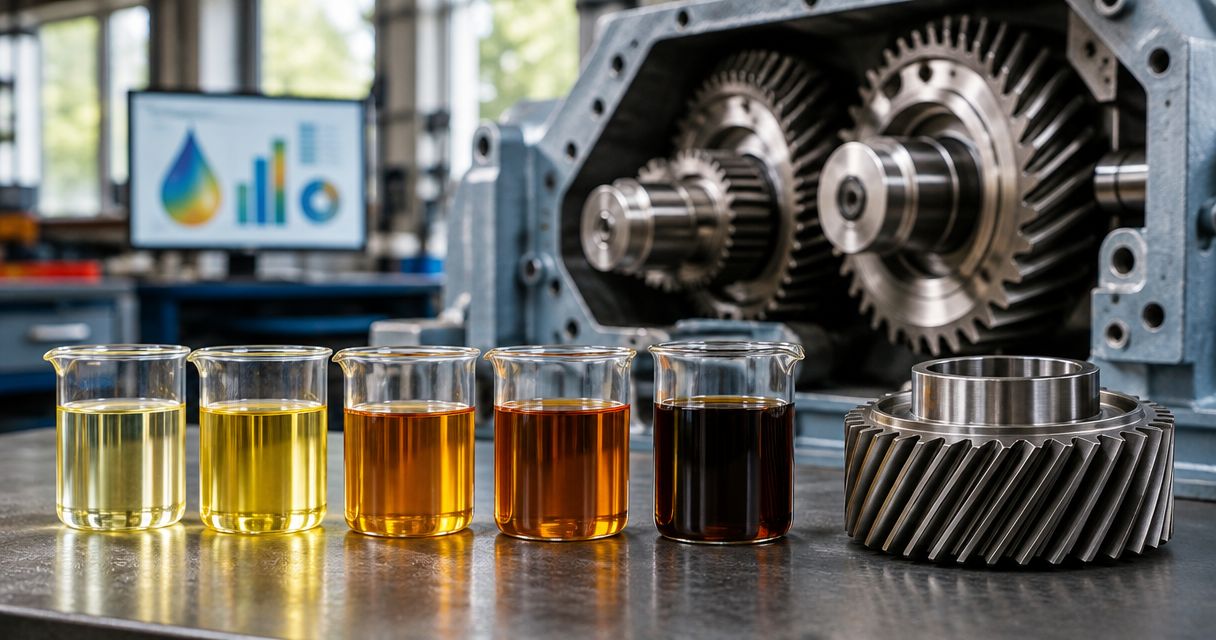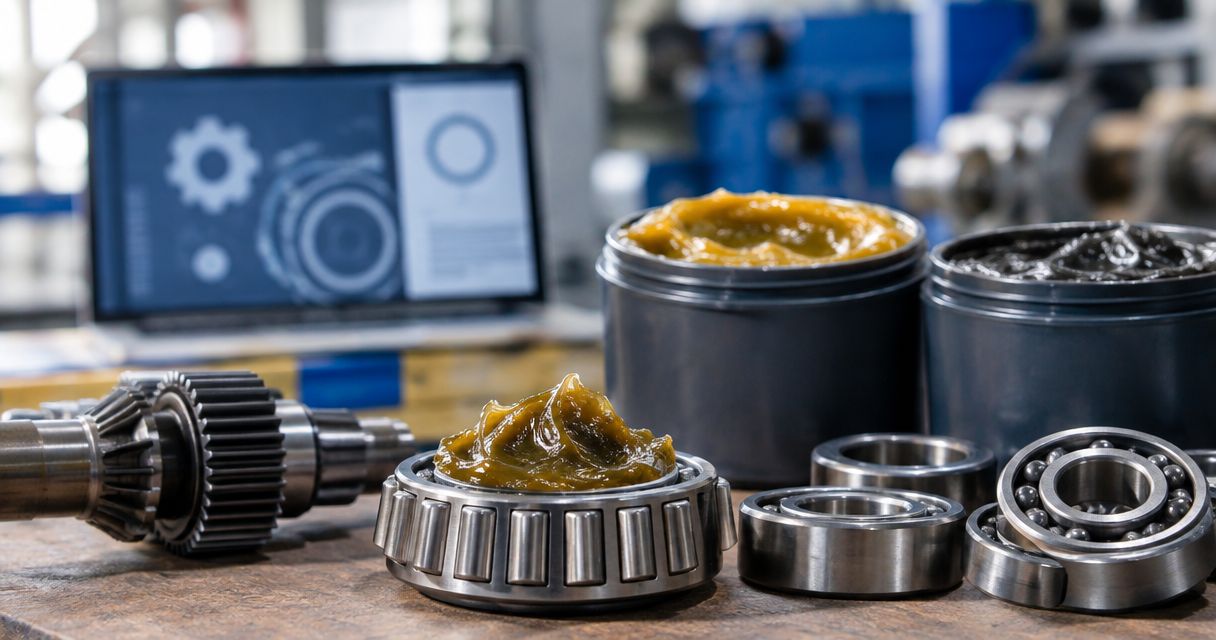
Best default for equipment specifying conventional multipurpose consistency: NLGI 2. Best softer alternative when the lubrication system permits it: NLGI 1. Best semi-fluid options for equipment explicitly requiring them: NLGI 0, 00, or 000. This 2026 guide to extreme pressure grease ranked by NLGI grade compares consistency and application fit—not load-carrying performance.
- Extreme pressure grease ranked by NLGI grade ranks consistency, not protection under load.
- NLGI 2 is the default only when the equipment specification calls for that consistency.
- NLGI 1, 0, 00, and 000 serve progressively softer application requirements; they are not automatic upgrades.
- For Lubriloy industrial grease selection, match the equipment specification before comparing extreme-pressure test results.
Why this matters
A higher NLGI number means firmer grease. It does not mean stronger extreme-pressure protection, higher base-oil viscosity, or better performance in your bearing. Those are separate selection questions.
For industrial maintenance buyers considering Lubriloy, the best extreme pressure grease is the one that matches the equipment's specified consistency and lubrication requirements. Treat that as the purchasing rule, not a reason to standardize every machine on the same cartridge.
This 2026 ranking puts broadly applicable consistency choices first, then separates the specialized softer and firmer options. For application-specific selection, use the guide to extreme pressure grease for heavy machinery alongside the machine manufacturer's instructions.
What makes the best extreme pressure grease
Judge an EP grease against these criteria before comparing grades:
- Required consistency: Match the specified NLGI grade. A grade change alters how grease flows, distributes, and remains in the housing.
- Base-oil viscosity: Select the oil viscosity required by the contact's speed, load, and operating temperature. NLGI grade does not supply this information.
- EP performance: Compare named test methods and their results. An EP label alone does not establish equivalence between greases.
- Delivery method: Check suitability for the actual grease gun, pump, line length, metering devices, and ambient conditions.
- Operating environment: Assess water exposure, temperature, contamination, sealing, and material compatibility against documented properties.
- Changeover compatibility: Check the existing grease and the proposed replacement. Matching NLGI numbers does not establish compatibility.
Approve the application first; rank the candidate formulations second. Lubriloy industrial grease comparisons should follow the same sequence rather than treating consistency as a performance score.
Extreme pressure grease grades at a glance
The table ranks application fit, not brands or laboratory performance. Each option has a distinct selection role; equipment requirements override the order.
| Ranked option | Best for | Standout characteristic | Key limitation |
|---|---|---|---|
| NLGI 2 EP grease | Bearings and grease points specifying conventional multipurpose consistency | Common consistency for general greasing duties | Not automatically suitable for every centralized system |
| NLGI 1 EP grease | Equipment specifying a softer grease | Softer consistency than NLGI 2 | Requires confirmation of retention and delivery suitability |
| NLGI 0 EP grease | Lubrication systems explicitly specifying very soft grease | Bridges conventional grease and semi-fluid selections | Cannot replace NLGI 2 solely because it pumps differently |
| NLGI 00 EP grease | Grease-lubricated gear housings specifying semi-fluid consistency | Semi-fluid consistency suited to designated enclosed applications | Requires a housing and seals suited to the specified lubricant |
| NLGI 000 EP grease | Equipment specifying exceptionally fluid grease | Softest option in this comparison | Unsuitable as a general replacement for grease retained at exposed points |
| NLGI 3 EP grease | Applications explicitly specifying firmer grease | Firmer consistency than NLGI 2 | Greater firmness does not establish better EP protection |
What the NLGI numbers measure
The NLGI consistency classification uses worked cone penetration determined by ASTM D217. The standard worked measurement follows 60 double strokes at 25°C; penetration is expressed in tenths of a millimeter. A larger penetration value indicates softer grease.
The established ranges are 265–295 tenths of a millimeter for NLGI 2, 310–340 for NLGI 1, and 355–385 for NLGI 0. NLGI 00 spans 400–430, NLGI 000 spans 445–475, and NLGI 3 spans 220–250, using the same units.
These are classification boundaries, not test results for a particular product. In 2026, use them to interpret a technical data sheet—not to predict bearing life, allowable load, or operating temperature.
1. NLGI 2: best extreme pressure grease for specified general greasing
NLGI 2 EP grease combines a commonly used consistency with whatever extreme-pressure formulation its manufacturer specifies. It belongs first in this ranking because it is a familiar choice for conventional grease points, not because its number proves better protection.
Best for: Bearings, pins, and other grease points whose maintenance instructions specify NLGI 2 and require EP performance. Confirm the base-oil viscosity and other requirements before selecting the formulation.
NLGI 2 pros:
- Fits many conventional grease-gun applications.
- Offers a familiar consistency for maintenance teams managing routine greasing.
- Provides a clear procurement filter when the equipment explicitly specifies grade 2.
NLGI 2 cons:
- Does not establish suitability for long centralized lubrication lines.
- Cannot identify base-oil viscosity, thickener chemistry, or EP performance.
- Is not interchangeable with every other grade-2 grease.
Ask whether the candidate grease meets the complete equipment specification. If the answer covers only NLGI grade, the selection is incomplete. Verdict: Buy when NLGI 2 and the formulation both meet the equipment requirements.
2. NLGI 1: best extreme pressure grease for specified softer consistency
NLGI 1 EP grease is softer than grade 2 under the classification test conditions. It belongs in applications that call for that softer consistency, including lubrication arrangements whose specifications permit it.
Best for: Equipment requiring NLGI 1 rather than a conventional grade-2 consistency. Consider pumpability separately: delivery depends on temperature, formulation, and system design, not the grade number alone.
NLGI 1 pros:
- Meets a clearly defined softer-consistency requirement.
- Provides an alternative where the equipment specification excludes firmer grease.
- Lets you compare EP formulations without changing the required consistency class.
NLGI 1 cons:
- Softer consistency changes retention behavior at the grease point.
- A grade-1 designation does not guarantee cold-weather delivery.
- Changing from grade 2 requires application approval and compatibility checks.
Do not use NLGI 1 to mask blocked lines, damaged fittings, or an incorrectly configured lubrication system. A consistency change is a lubricant-selection decision, not a substitute for repairs. Verdict: Buy for a documented NLGI 1 requirement; hold an unapproved substitution.
3. NLGI 0: best extreme pressure grease for specified very-soft systems
NLGI 0 EP grease occupies the very-soft end of grease consistency. Its role is different from choosing a conventional cartridge grease for general maintenance.
Best for: Centralized lubrication equipment or enclosed applications that explicitly specify NLGI 0. Verify the grease against both the lubrication-system instructions and the machinery instructions.
NLGI 0 pros:
- Matches equipment designed around very-soft grease.
- Provides a distinct consistency class for system-specific procurement.
- Keeps selection separate from the still softer 00 and 000 grades.
NLGI 0 cons:
- Requires confirmation that the application retains and distributes the grease correctly.
- Is not a default choice for exposed points specifying firmer grease.
- Does not guarantee successful passage through every pump or metering device.
Check how lubricant reaches the contact and where excess lubricant goes. Delivery and retention matter together; solving only the delivery question leaves the application unfinished. Verdict: Buy for an explicit NLGI 0 specification; skip as a blanket fleet replacement.
4. NLGI 00: best extreme pressure grease for specified semi-fluid housings
NLGI 00 EP grease is a semi-fluid option used in designated grease-lubricated enclosed equipment. It is not simply gear oil with a different label, and its grade does not establish suitability for a particular gearbox.
Best for: Enclosed gear housings whose manufacturer specifies NLGI 00 grease. Confirm the base-oil viscosity, operating conditions, fill procedure, and seal requirements.
NLGI 00 pros:
- Matches designated semi-fluid grease applications.
- Offers a defined consistency for comparing approved gearbox lubricants.
- Separates enclosed-housing selection from conventional grease-point selection.
NLGI 00 cons:
- Does not repair damaged seals or a leaking housing.
- Cannot replace a specified gear oil without manufacturer approval.
- Requires the correct filling and servicing instructions for the equipment.
A leaking oil-filled gearbox is not, by itself, a reason to switch to semi-fluid grease. Correct the fault and retain the specified lubrication method unless the manufacturer approves a change. Verdict: Buy for an approved NLGI 00 housing application; skip as a leak workaround.
5. NLGI 000: best extreme pressure grease for specified fluid consistency
NLGI 000 EP grease is the softest consistency in this ranking. Its application is narrow: select it when the equipment calls for this exceptionally fluid grease class.
Best for: Purpose-designed lubrication arrangements or enclosed equipment explicitly requiring NLGI 000. Do not infer approval from a general request for a soft grease.
NLGI 000 pros:
- Meets the specific requirement for this fluid consistency class.
- Distinguishes a very-soft application from NLGI 0 or 00 requirements.
- Supports direct comparisons between formulations of the required grade.
NLGI 000 cons:
- Is not a conventional substitute for retained grease at exposed points.
- Requires application-specific control of leakage and distribution.
- Its consistency does not prove oil-like lubrication performance.
Read the exact grade designation on the maintenance specification. NLGI 0, 00, and 000 are separate classes, not alternative spellings. Verdict: Buy only for a documented NLGI 000 application.
6. NLGI 3: best extreme pressure grease for specified firmer consistency
NLGI 3 EP grease is firmer than grade 2. It earns a place when the equipment specification requires that firmness—not when a buyer wants a grease that sounds heavier-duty.
Best for: Applications explicitly specifying NLGI 3 consistency. Evaluate how the grease enters the contact as carefully as how it remains in the housing.
NLGI 3 pros:
- Matches a defined firmer-consistency requirement.
- Provides a distinct alternative where grade 2 is not specified.
- Allows EP formulation comparisons within the required firmness class.
NLGI 3 cons:
- Firmer consistency places different demands on lubricant delivery.
- Does not demonstrate higher load capacity or temperature tolerance.
- Is not an automatic solution for leakage or grease loss.
Do not select NLGI 3 merely because a bearing runs hot or loses grease. Diagnose the cause before changing the lubricant specification. Verdict: Buy for an explicit grade-3 requirement; skip as an assumed performance upgrade.
How this ranking works
The 2026 ranking prioritizes application fit: conventional specified greasing first, softer system-specific grades next, and firmer specified grease last. It does not rank unreported product tests or claim that one consistency protects every machine better.
For candidate EP formulations, compare like-for-like test methods. ASTM D2596 addresses four-ball EP properties; ASTM D2266 addresses four-ball wear characteristics. Their results answer different questions, so a wear result is not an EP weld-load result.
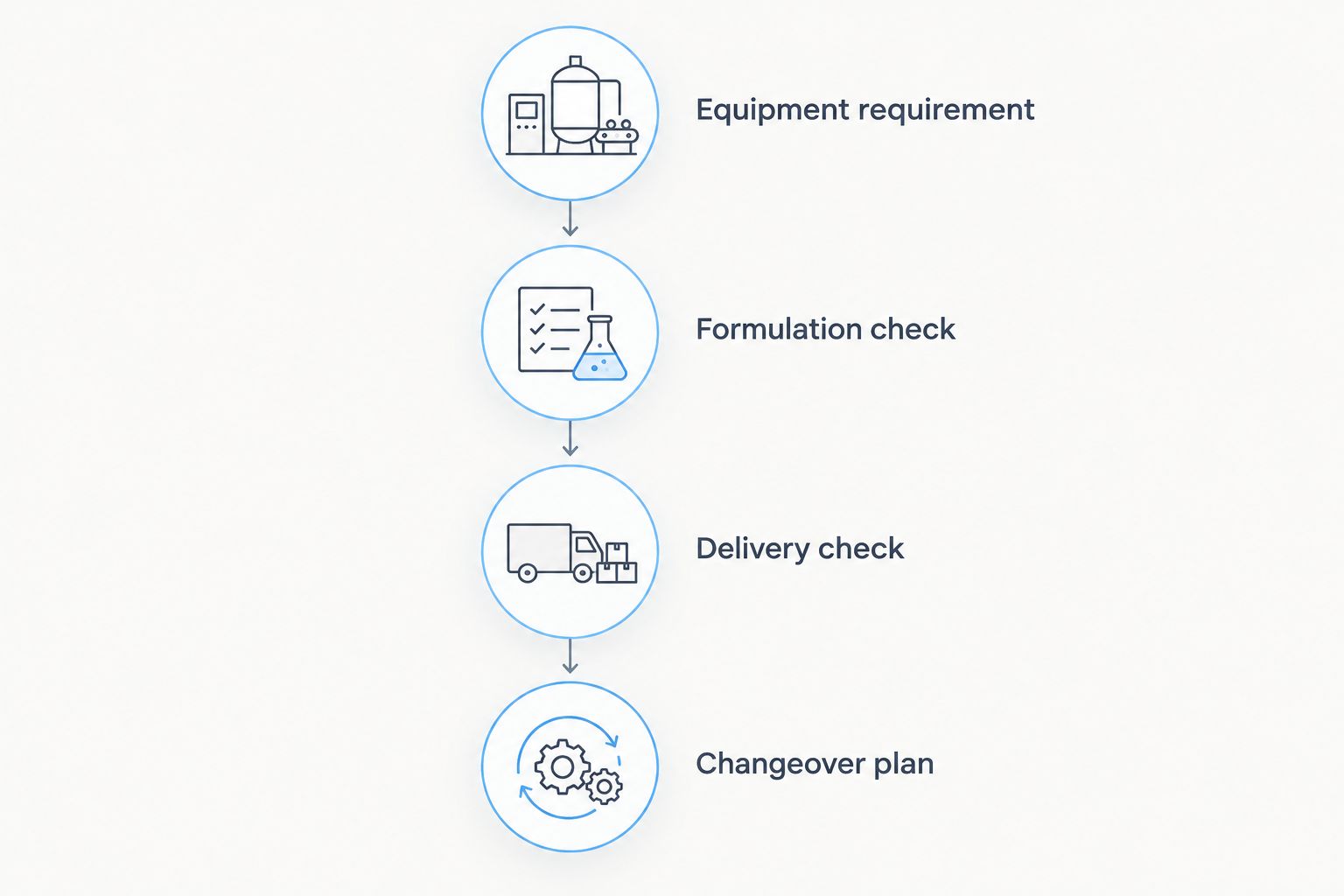
Use this approval sequence before ordering:
- Equipment requirement: Record the specified grade, viscosity, and approvals.
- Formulation check: Compare the candidate's documented properties against those requirements.
- Delivery check: Confirm suitability for the lubrication equipment and operating conditions.
- Changeover plan: Resolve compatibility, cleaning, filling, and maintenance instructions.
The same sequence applies when comparing Lubriloy industrial grease with another candidate. Brand familiarity does not replace a specification match.
Which extreme pressure grease should you choose?
Choose NLGI 2 when your equipment specifies NLGI 2; choose another grade when the equipment requires it. That is the practical default for this 2026 guide, not a universal product endorsement.
If several greases meet the same consistency requirement, compare base-oil viscosity, documented EP performance, environmental suitability, and compatibility. Do not choose the highest grade number or the most impressive isolated test result.
For a Lubriloy selection, bring the machine specification and existing lubricant identity into the decision. Approve a formulation for the actual duty, then document where maintenance teams should—and should not—use it.
FAQ
What's the best extreme pressure grease ranked by NLGI grade?
NLGI 2 is the default for equipment specifying conventional multipurpose consistency, but the best grade is the equipment's required grade. NLGI consistency does not rank extreme-pressure protection.
Is NLGI 2 better than NLGI 1 for heavy loads?
NLGI 2 is firmer than NLGI 1, not inherently better for heavy loads. Compare the required base-oil viscosity and documented EP properties after matching the equipment's consistency requirement.
Does a higher NLGI grade mean thicker base oil?
No. NLGI grade measures grease consistency, while base-oil viscosity describes the oil within the grease. Check both properties separately on the technical data sheet.
Can I replace NLGI 2 grease with NLGI 00?
Only use NLGI 00 as a replacement when the equipment manufacturer approves it. The change affects consistency, retention, and distribution, and matching EP labels does not establish suitability.
What's the difference between NLGI 0, 00, and 000?
NLGI 0, 00, and 000 are distinct consistency classes, with 000 the softest of the three. Follow the exact grade specified for the equipment rather than treating them as interchangeable.
Can I mix two EP greases with the same NLGI grade?
The same NLGI grade does not establish grease compatibility. Check the formulations and follow an approved changeover procedure before combining or replacing them.
Which tests should I compare when selecting an EP grease?
Compare the same test methods across candidates. ASTM D2596 addresses four-ball EP properties, while ASTM D2266 addresses four-ball wear characteristics; neither replaces the equipment specification.
Should I use firmer grease when a bearing runs hot?
Do not change to firmer grease solely because a bearing runs hot. Investigate lubrication quantity, delivery, mechanical condition, and the specified lubricant before approving a change.
One last thing
NLGI grade is a consistency filter, not the finished purchasing specification. Two EP greases marked NLGI 2 still require comparison of their base oils, thickeners, additives, test results, and application approvals.
Add those fields to your maintenance record. When a replacement is proposed, you can compare the properties that matter instead of approving it because the cartridge carries the same grade number.