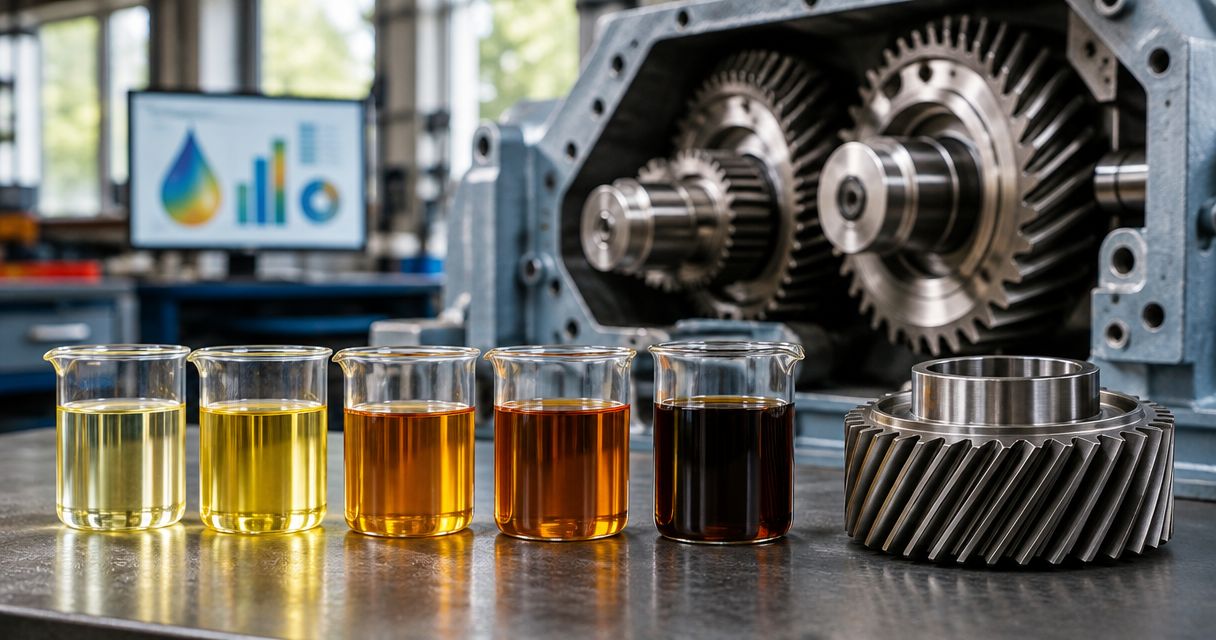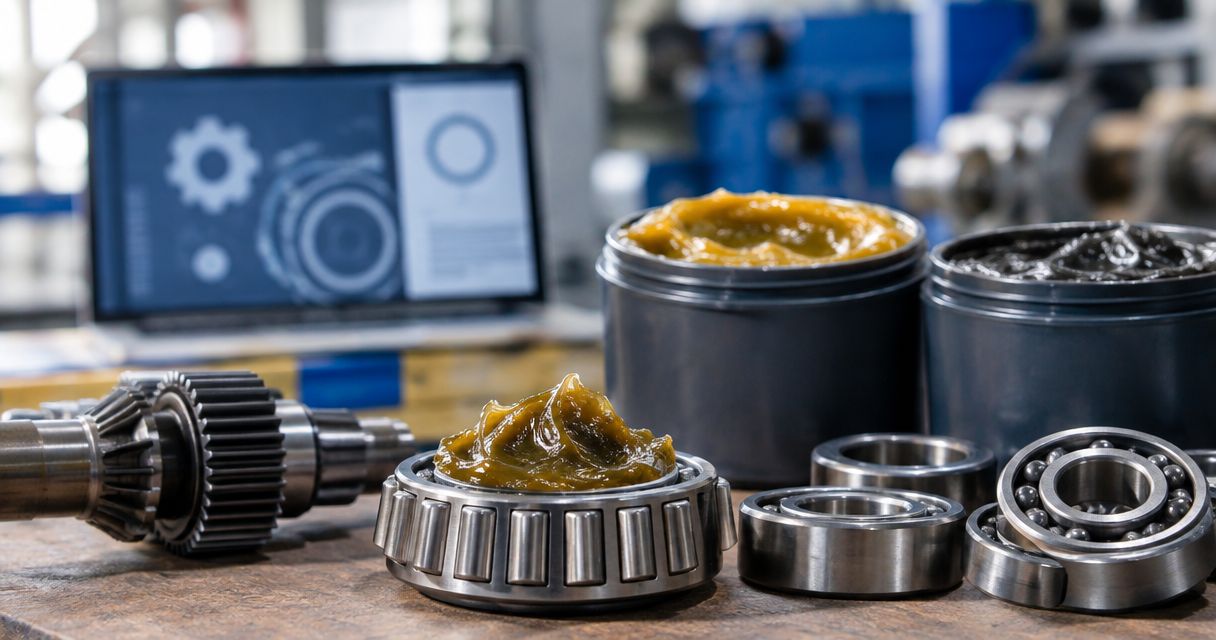
Best overall for conventional industrial machinery: a correctly specified PAO-based lubricant. Best for specialized heat exposure: a validated PFPE formulation. Best for routine, moderate-temperature service: an approved mineral oil. This 2026 guide explains industrial lubricants ranked by temperature range without treating base-oil chemistry as a guaranteed operating specification.
- Industrial lubricants ranked by temperature range need formulation-specific limits, not a universal chemistry ladder.
- PAO is the default shortlist for conventional machinery facing cold starts and elevated operating temperatures.
- PFPE deserves consideration for specialized heat exposure; equipment compatibility still controls selection.
- Evaluate Lubriloy industrial lubricants against equipment requirements, operating temperature, and documented formulation limits.
Why this matters
A lubricant can flow during a cold start yet become too thin at operating temperature. Another can tolerate heat chemically but fail to supply the viscosity, load protection, or seal compatibility your machine requires. The widest advertised temperature range is not automatically the best operating range.
For buyers considering Lubriloy, industrial lubricant selection starts with the machine specification—not a chemistry ranking. Record the coldest start, stabilized operating temperature, and hottest exposure before comparing formulations.
The useful distinction in 2026 is between continuous operation and temporary exposure. A short excursion does not establish a safe continuous-service limit, and a grease dropping point does not establish either one.
What makes the best industrial lubricant for temperature range
Use these criteria before comparing lubricant families:
- Cold-start behavior: The lubricant must reach the working surfaces and allow the equipment to start under its actual load.
- Operating viscosity: The lubricant must maintain the viscosity required by the equipment at its working temperature.
- Thermal and oxidation stability: Evaluate resistance to degradation under the actual combination of heat, air exposure, and operating conditions.
- Application compatibility: Check seals, metals, coatings, existing lubricant, and the equipment manufacturer's requirements.
- Oil versus grease construction: A grease's thickener, base oil, additives, and oil-release behavior all matter. Base-oil chemistry alone cannot define its limits.
- Documented service limits: Prefer formulation-specific continuous and intermittent limits over general claims about synthetic or mineral lubricants.
These criteria keep the ranking useful. A lubricant that survives a laboratory temperature but cannot circulate through your system is not a suitable choice.
Industrial lubricants by temperature suitability at a glance
The order below prioritizes a practical default, followed by specialized alternatives. It is a selection ranking, not a universal numerical ranking of maximum temperatures: finished formulations within each family have different limits.
| Rank and lubricant family | Best for | Temperature-related strength | Key limitation |
|---|---|---|---|
| PAO-based lubricants | Conventional machinery with cold starts and elevated operating temperatures | Useful low-temperature behavior and viscosity-temperature characteristics | Finished-formulation limits and material compatibility still require verification |
| PFPE-based lubricants | Specialized applications with demanding heat or chemical exposure | Thermal and chemical stability in appropriately selected formulations | Requires application-specific compatibility and changeover controls |
| Synthetic ester lubricants | Applications needing a polar synthetic base oil | Lubricity and solvency alongside formulation-dependent temperature performance | Moisture sensitivity and seal effects vary by ester chemistry |
| PAG-based lubricants | Equipment designed for a specified PAG formulation | Useful viscosity-temperature behavior in suitable applications | Compatibility with other oils and materials requires particular attention |
| Mineral-oil lubricants | Approved equipment operating within moderate temperature conditions | Established option where the specified grade meets operating requirements | Severe cold or sustained heat can narrow the suitable operating window |
Do not assign a single minimum and maximum temperature to any row. A base-oil family is not a finished lubricant, and an oil recommendation does not automatically apply to grease made with that oil.
1. PAO: best industrial lubricant for broad conventional service
Polyalphaolefin, or PAO, is a synthetic hydrocarbon base-oil family used in industrial lubricant formulations. PAO-based oils are a practical starting point when you need cold-start performance alongside elevated-temperature operation.
Best for: Conventional industrial machinery whose specifications permit the selected PAO formulation.
PAO's temperature characteristics do not eliminate viscosity selection. A formulation that handles the ambient conditions still needs the correct working viscosity and additive system for the bearing, gearbox, compressor, or circulating system.
PAO pros
- Useful low-temperature properties for cold-start applications.
- Favorable viscosity-temperature behavior compared with conventional mineral base oils.
- Suitable foundation for many industrial lubricant formulations when equipment requirements match.
PAO cons
- Base-oil chemistry does not establish the finished product's continuous temperature limit.
- Seal behavior and compatibility depend on the complete formulation.
- A general-purpose PAO oil is not automatically suitable for every load or machine type.
For a 2026 maintenance specification, shortlist PAO only after identifying the required viscosity grade and approvals. Ask for the finished lubricant's temperature guidance rather than extrapolating from the word synthetic.
Verdict: Buy a PAO-based formulation when its documented limits and equipment specification match your operating conditions.
2. PFPE: best industrial lubricant for specialized heat exposure
Perfluoropolyether, or PFPE, is a fluorinated synthetic base-oil family. Its thermal and chemical stability makes it relevant to specialized applications where conventional lubricant chemistries are unsuitable.
Best for: Equipment with demanding heat or chemical exposure and an established requirement for a compatible PFPE formulation.
PFPE deserves a place on a high-temperature shortlist, not an automatic place in every hot machine. The selected formulation must still meet the application's lubrication needs, and a PFPE grease's thickener remains part of the operating-limit assessment.
PFPE pros
- Relevant chemistry for specialized high-temperature lubrication.
- Chemical stability supports use in demanding environments when the formulation is appropriate.
- Available as a base-oil family for application-specific oils and greases.
PFPE cons
- Mixing with an existing lubricant is not an acceptable substitute for a compatibility assessment.
- Converting equipment requires a defined cleaning and changeover procedure.
- Temperature stability alone does not establish load capacity or equipment suitability.
If PFPE is under consideration, review the equipment manufacturer's guidance and the lubricant supplier's handling instructions together. Do not carry over the previous lubricant's relubrication interval without validation.
Verdict: Hold PFPE selection until the exact formulation, materials, and changeover procedure are approved.
3. Synthetic esters: best industrial lubricant for polarity and solvency
Synthetic esters are a broad group of base oils rather than one uniform chemistry. Their polarity contributes to lubricity and solvency, while their temperature performance depends on ester structure and the finished formulation.
Best for: Applications requiring an ester-based lubricant's combination of lubricity, solvency, and specified thermal performance.
An ester formulation belongs on the shortlist when the machine specification supports it. It does not belong there solely because another ester product operates at a demanding temperature in unrelated equipment.
Synthetic ester pros
- Polar chemistry contributes to lubricity.
- Solvency can support formulation objectives involving deposits and additive behavior.
- Offers formulation choices for applications needing synthetic temperature performance.
Synthetic ester cons
- Resistance to hydrolysis varies by ester chemistry and service conditions.
- Seal and coating compatibility require verification.
- Temperature ratings cannot be transferred between different ester formulations.
Water exposure changes the selection discussion. If your system experiences condensation or process-water contamination, include that condition in the lubricant review rather than treating temperature as the only stress.
Verdict: Buy an ester-based lubricant when the equipment requires it and moisture and material compatibility are addressed.
4. PAG: best industrial lubricant for PAG-specified equipment
Polyalkylene glycol, or PAG, describes a family of synthetic base oils with differing properties. PAG formulations can offer useful viscosity-temperature behavior, but water solubility and compatibility depend on the specific chemistry.
Best for: Equipment that specifies a particular PAG lubricant or permits a documented PAG conversion.
Do not treat all PAG oils as interchangeable. The correct decision starts with the exact product specification, not the family abbreviation on a container.
PAG pros
- Useful viscosity-temperature behavior in suitable formulations.
- Chemistry options support distinct industrial applications.
- A relevant choice when the equipment specification explicitly calls for PAG.
PAG cons
- Compatibility with mineral oil, PAO, and other lubricants requires verification.
- Water behavior varies across the family.
- Seals, paints, and other materials need formulation-specific review.
For a 2026 conversion project, identify what is already inside the system before choosing PAG. Residual oil, inaccessible cavities, and material compatibility belong in the changeover plan.
Verdict: Hold a PAG conversion until the exact chemistry and equipment compatibility are confirmed.
5. Mineral oil: best industrial lubricant for moderate conditions
Mineral oils remain a valid choice where the equipment specification and temperature conditions support them. Their performance depends on refining, viscosity grade, additive chemistry, and operating conditions.
Best for: Equipment operating within the documented limits of an approved mineral-oil formulation.
A synthetic replacement is not automatically necessary. If the existing mineral oil meets the machine's cold-start, working-viscosity, and service requirements, changing chemistry needs a defined reason.
Mineral oil pros
- Established lubricant family for industrial machinery.
- Suitable where the specified formulation meets operating conditions.
- Allows continuity with an existing approved lubrication program.
Mineral oil cons
- Cold-start flow requires close attention in low ambient temperatures.
- Sustained heat places pressure on oxidation control and service life.
- A heavier viscosity grade does not automatically solve a temperature problem.
Review temperature at the lubricated component, not just the room or outdoor environment. Ambient conditions influence the system, but they do not describe the complete operating exposure.
Verdict: Buy an approved mineral oil for matching conditions; skip an unnecessary chemistry change.
Read temperature specifications without confusing the tests
Technical data sheets contain temperatures that answer different questions. Treating them as interchangeable creates a false operating range.
- Kinematic viscosity: Values reported at 40°C and 100°C describe viscosity at standardized measurement temperatures. They are not minimum and maximum service ratings.
- Pour point: This laboratory property characterizes low-temperature flow under a defined test. It is not a guarantee that a pump, gearbox, or bearing will start at that temperature.
- Flash point: This test concerns ignition of vapors under specified conditions. It is not a recommended continuous operating temperature.
- Dropping point: For applicable greases, this test records behavior of the grease structure under defined heating conditions. It is not the grease's service-temperature ceiling.
- Continuous-service limit: This is the relevant operating guidance to request for sustained exposure, together with its application conditions.
A test at 100°C does not mean the lubricant is approved for continuous operation at 100°C. Likewise, a high dropping point cannot compensate for unsuitable base-oil viscosity or inadequate oil delivery.
Build a temperature-based selection in the right order
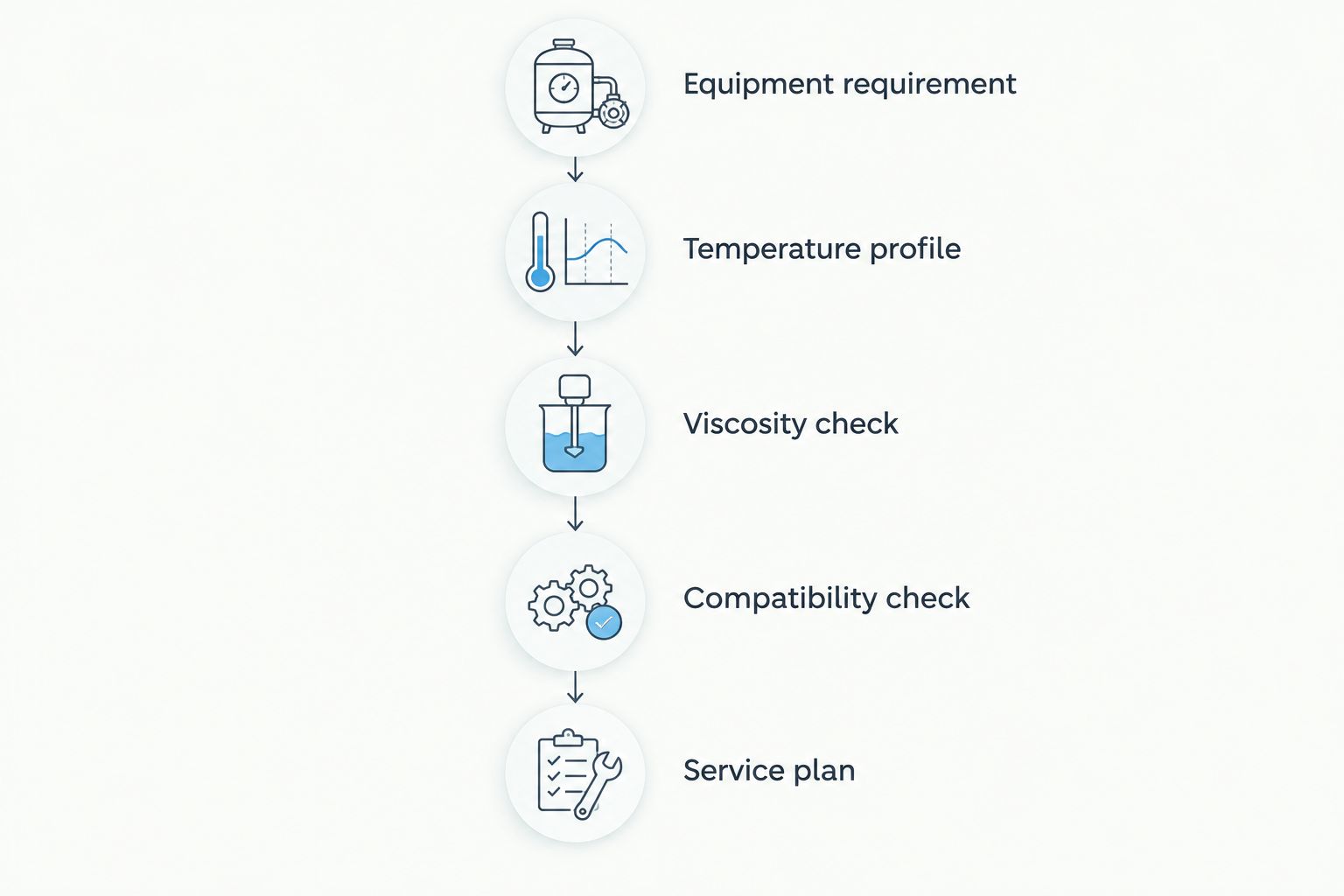
Use this sequence for your 2026 lubricant review. It prevents a compelling temperature claim from overriding a machine requirement.
Equipment requirement
Start with the equipment manual, required lubricant type, viscosity grade, and applicable approvals. Separate oil-lubricated systems from grease-lubricated components before comparing candidates.
Temperature profile
Record the coldest start, normal stabilized temperature, and hottest observed condition at relevant measurement points. Identify whether the high-temperature exposure is continuous, intermittent, or a symptom of a fault.
Viscosity check
Evaluate viscosity at the actual operating temperature using the supplier's data. Check cold-start delivery separately; adequate hot viscosity does not prove adequate cold flow.
Compatibility check
Review seals, coatings, metals, water exposure, process chemicals, and the existing lubricant. For grease, also assess compatibility and the proposed changeover procedure.
Service plan
Define inspection, sampling where applicable, and relubrication or oil-change controls. Temperature capability does not remove the need to manage contamination and lubricant condition.
When discussing Lubriloy industrial lubricants, bring this operating profile to the selection discussion. The best lubricant for your machine is the formulation that meets its complete operating requirements—not the family with the strongest heat reputation.
How the lubricant families were ranked
This 2026 selection ranking uses cold-start behavior, working viscosity, thermal stability, compatibility, and documented service limits. PAO leads as a practical default for conventional machinery; PFPE, esters, and PAG address more specific requirements, while mineral oil remains appropriate within an approved operating envelope.
The ranking does not assign unsupported temperature bands to entire chemistries. A numerical comparison requires the technical data and application guidance for the actual finished lubricants.
Which industrial lubricant should you choose?
Start with the equipment-approved formulation, then test its suitability against your measured temperature profile. Shortlist PAO for conventional equipment needing broader temperature performance, investigate PFPE for specialized exposure, and retain mineral oil when it already meets the requirement.
For Lubriloy selection discussions, make the decision document specific: component, operating conditions, required viscosity, existing lubricant, and compatibility constraints. That document is more useful than a generic hottest-to-coldest list.
FAQ
What's the best industrial lubricant for a wide temperature range?
A correctly specified PAO-based formulation is a practical starting point for conventional machinery facing cold starts and elevated operating temperatures. The equipment specification and finished lubricant's documented limits decide whether it is suitable.
Which industrial lubricant should I consider for extreme heat?
A validated PFPE formulation deserves consideration for specialized high-temperature applications. Confirm the exact product's operating limits, material compatibility, and changeover requirements before selecting it.
Can industrial lubricants be ranked by temperature range alone?
Temperature range alone cannot establish the best industrial lubricant. Compare working viscosity, cold-start delivery, load requirements, compatibility, and continuous versus intermittent exposure.
Does a grease's dropping point show its maximum operating temperature?
No, dropping point is not a grease's maximum service temperature. Evaluate the finished grease's application guidance, base oil, thickener, and operating conditions.
Is synthetic oil always better than mineral oil?
Synthetic oil is not automatically the better choice for every machine. An approved mineral-oil formulation remains suitable when it meets the equipment's operating and temperature requirements.
Can I mix PAG oil with the lubricant already in my machine?
Do not mix PAG with an existing lubricant without a formulation-specific compatibility assessment. Confirm the exact PAG chemistry, residual-oil limits, materials, and required changeover procedure.
What should I prepare before discussing Lubriloy industrial lubricants?
Prepare the equipment specification, temperature profile, required viscosity, existing lubricant, and contamination conditions. These details connect lubricant selection to the machine's actual operating requirements.
One last thing
Before changing lubricant to address overheating, check whether the temperature rise signals a lubrication or mechanical fault. Overgreasing, restricted oil delivery, contamination, and bearing problems need investigation—not just a formulation with a higher temperature limit.
Use the 2026 lubricant review to solve the operating problem, not merely to replace the container.