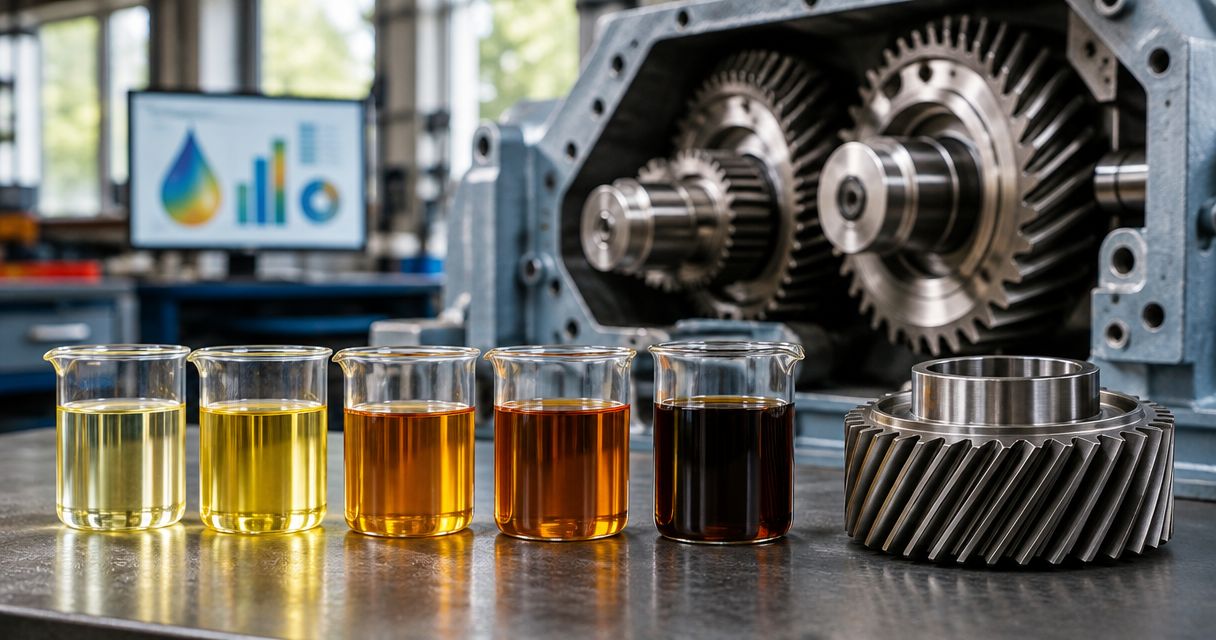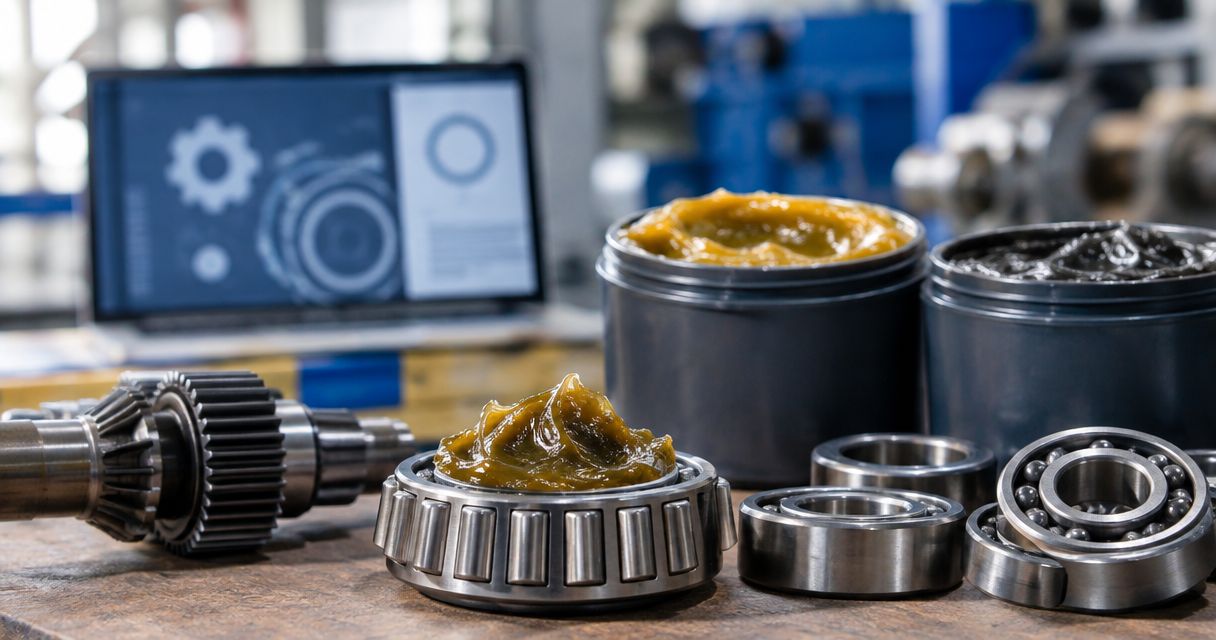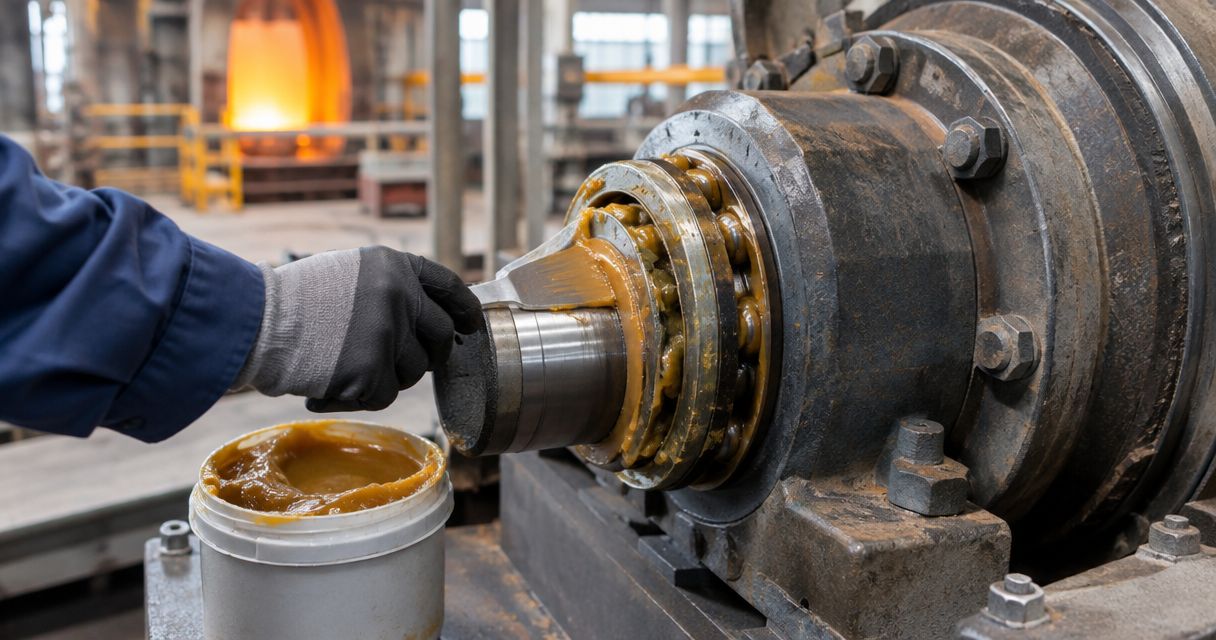
Best overall candidate: synthetic-oil polyurea grease for rolling bearings when the equipment specification permits it. Best for heavy loads and water exposure: calcium sulfonate complex grease. Best for exceptional heat and chemical exposure: PFPE/PTFE grease, subject to bearing-maker approval. This 2026 guide identifies the best high temperature grease for kiln bearings by application—not by the highest temperature printed on a container.
- The best high temperature grease for kiln bearings matches bearing temperature, speed, load, and equipment requirements.
- Synthetic-oil polyurea grease is the default candidate for compatible, heat-exposed rolling bearings.
- Calcium sulfonate complex grease suits heavily loaded bearings exposed to water when its specifications match.
- PFPE/PTFE grease requires application approval and a controlled changeover from conventional grease.
- Lubriloy supplies industrial lubricants and greases; select kiln bearing grease against documented equipment requirements.
Why this matters
A kiln's process temperature is not its bearing temperature. Selecting grease from furnace temperature alone skips the conditions that actually determine lubricant suitability: heat at the bearing, rotational speed, load, contamination, and the lubrication arrangement.
Lubriloy supplies industrial premium lubricants and greases. For a 2026 kiln or furnace maintenance specification, begin with the equipment manual and the bearing designation rather than a generic high-temperature label.
A grease's dropping point is not its maximum continuous operating temperature. A thickener can retain structure while the base oil oxidizes, evaporates, or fails to provide the required lubricating film. Buying on dropping point alone leaves those failure mechanisms unchecked.
What makes the best grease for kiln bearings?
Use these criteria before comparing grease families. A candidate that fails a mandatory equipment requirement does not belong on your shortlist.
- Bearing temperature: Record steady operation and startup or upset conditions at a consistent measurement location. Distinguish housing readings from temperatures inside the bearing.
- Base-oil viscosity and speed: Match viscosity to operating temperature, bearing size, and rotational speed. Thicker oil is not automatically better.
- Load protection: Identify radial load, axial load, shock, and slow movement. Check the grease's documented suitability for those conditions.
- Water and contamination: Include cooling-water leaks, washdown, scale, and airborne dust. Grease cannot compensate for failed seals.
- Compatibility and delivery: Confirm compatibility with the installed grease, seals, and lubrication system. Similar color or consistency proves nothing.
- Documented service limits: Use the specific grease's technical data and equipment approval. Chemistry names describe families, not guaranteed performance.
For consistency, the NLGI classification uses worked penetration measured under ASTM D217. NLGI grade 2 corresponds to a penetration range of 265–295 tenths of a millimeter at 25°C; the standard worked measurement uses 60 double strokes. Those figures describe consistency, not a safe bearing temperature.
Lubriloy high-temperature grease selection should follow the same distinction: consistency, thermal suitability, and load protection answer different questions. Do not substitute one property for another.
Kiln bearing grease options at a glance
These rankings compare grease families, not named formulations. Every recommendation requires confirmation against the actual product data and equipment specification.
| Rank and grease family | Best for | Standout characteristic | Key limitation |
|---|---|---|---|
| Synthetic-oil polyurea grease | Heat-exposed rolling bearings with compatible specifications | A candidate for oxidation-resistant rolling-bearing lubrication | Not every formulation suits heavy loads, existing grease, or centralized delivery |
| Calcium sulfonate complex grease | Heavily loaded bearings with water exposure | A family associated with load protection and water resistance | Base-oil viscosity and speed suitability still need checking |
| PFPE/PTFE grease | Exceptional thermal or chemical exposure | Fluorinated chemistry for specialized operating conditions | Requires formulation-specific approval and controlled conversion |
| Synthetic-oil lithium complex grease | Established applications already specified for lithium complex | An alternative within a familiar grease family | A high dropping point does not establish useful life in heat |
1. Synthetic-oil polyurea: best for heat-exposed rolling bearings
Synthetic-oil polyurea grease combines a synthetic base oil with a polyurea thickener. It is a starting candidate for kiln and furnace rolling bearings where the equipment specification permits this chemistry and the selected formulation matches speed and load.
The useful distinction is the entire formulation, not the word polyurea. Base-oil type, viscosity, additives, and consistency determine whether a particular grease fits the bearing.
Synthetic-oil polyurea pros:
- Provides a grease-family shortlist for heat-exposed rolling bearings.
- Includes formulations developed for oxidation resistance and extended bearing service.
- Allows viscosity and consistency selection within the family.
- Fits applications that already specify an approved polyurea formulation without changing thickener families.
Synthetic-oil polyurea cons:
- Compatibility with another polyurea grease is not automatic.
- Heavy-load suitability depends on the specific additive package and product approval.
- A centralized lubrication system needs separate pumpability and delivery checks.
For a 2026 maintenance specification, record the exact formulation rather than writing only synthetic polyurea. That prevents a replacement grease with different viscosity or load protection from being treated as equivalent.
Best for: Rolling bearings with sustained heat exposure and a documented match to the grease's service conditions.
Verdict: Buy only when the selected synthetic-oil polyurea formulation meets the bearing and lubrication-system requirements.
2. Calcium sulfonate complex: best for heavy loads and water exposure
Calcium sulfonate complex grease is a strong family to investigate when kiln support bearings face substantial loads alongside water or corrosion exposure. Its thickener chemistry is associated with load-carrying performance and water resistance, but those traits do not replace product-level verification.
A slow, heavily loaded support bearing and a faster furnace auxiliary bearing impose different viscosity requirements. Do not standardize both onto one grease simply because both operate near hot equipment.
Calcium sulfonate complex pros:
- Offers a relevant shortlist for loaded bearings exposed to water.
- Combines load-protection and corrosion-resistance characteristics within the grease family.
- Suits specification reviews where water contamination is a recurring concern.
- Supports selection across different base-oil viscosities and formulations.
Calcium sulfonate complex cons:
- A formulation selected for slow, loaded service is not automatically suitable for higher-speed bearings.
- Water resistance does not make lubricant contamination harmless.
- Pumpability and compatibility require confirmation before a plant-wide change.
First address leaking cooling lines, damaged seals, and contaminated grease fittings. Choosing a water-resistant grease while leaving the ingress route open does not resolve the maintenance problem.
Best for: Heavily loaded kiln bearings with water exposure, provided the chosen formulation meets temperature and speed requirements.
Verdict: Buy when load and water exposure justify this chemistry and the product data match the bearing.
3. PFPE/PTFE: best for exceptional thermal or chemical exposure
PFPE/PTFE grease uses perfluoropolyether base oil with a polytetrafluoroethylene thickener. It belongs on the shortlist for specialized furnace-bearing duties where conventional grease options do not meet the documented thermal or chemical requirements.
Do not treat fluorinated chemistry as permission to ignore bearing design limits. The bearing, cage, seals, and grease must all suit the actual environment.
PFPE/PTFE pros:
- Provides a specialized chemistry for demanding thermal and chemical conditions.
- Offers an alternative when approved conventional greases cannot meet the application specification.
- Allows a clearly separated lubrication specification for exceptional furnace duties.
PFPE/PTFE cons:
- Conversion from conventional grease requires a defined cleaning and changeover procedure.
- Load performance and material compatibility remain formulation-specific.
- Product-family names alone do not establish suitability for the particular process atmosphere.
For a 2026 furnace-bearing conversion, require written instructions covering removal of the old lubricant, cleaning materials, seal compatibility, and initial filling. Adding PFPE/PTFE grease through a fitting still containing conventional grease is not a controlled conversion.
Best for: Specialized furnace bearings with exceptional thermal or chemical exposure and explicit approval for the selected formulation.
Verdict: Hold until the equipment approval and conversion procedure are documented.
4. Synthetic-oil lithium complex: best for established specifications
Synthetic-oil lithium complex grease combines a synthetic base oil with a lithium complex thickener. It is a candidate when the equipment already specifies this family and the selected formulation satisfies the bearing's measured operating conditions.
The case for this option is continuity with an approved specification, not a claim that lithium complex fits every hot bearing. A chemistry change without a clear technical reason introduces another variable into maintenance.
Synthetic-oil lithium complex pros:
- Supports continuity in applications already approved for lithium complex grease.
- Includes formulations with different viscosity and load-protection characteristics.
- Avoids an unnecessary thickener-family change when the existing specification remains suitable.
Synthetic-oil lithium complex cons:
- Synthetic base oil alone does not establish the grease's service-temperature limit.
- Greases within the family are not automatically compatible or interchangeable.
- A high dropping point does not prove acceptable oxidation life at bearing temperature.
Review the specific formulation's service limits and relubrication guidance. If the bearing runs outside those limits, shortening the maintenance interval is not a substitute for resolving the mismatch.
Best for: Kiln and furnace bearings with an existing lithium complex specification that remains appropriate for measured conditions.
Verdict: Buy when the established specification is valid; skip an unsupported substitution.
How these grease families rank
Synthetic-oil polyurea takes the default rolling-bearing slot; calcium sulfonate complex addresses the load-and-water slot; PFPE/PTFE addresses exceptional exposure; synthetic-oil lithium complex addresses specification continuity. These are application priorities, not laboratory performance scores.
Lubriloy industrial lubricants and greases should be evaluated against the same criteria. Brand identity does not override bearing requirements, and a grease-family recommendation does not approve an unnamed formulation.
For the broader selection framework, use the guide to high-temperature grease for industrial bearings. Kiln selection adds particular attention to radiant heat, support loads, contamination, and access for replenishment.
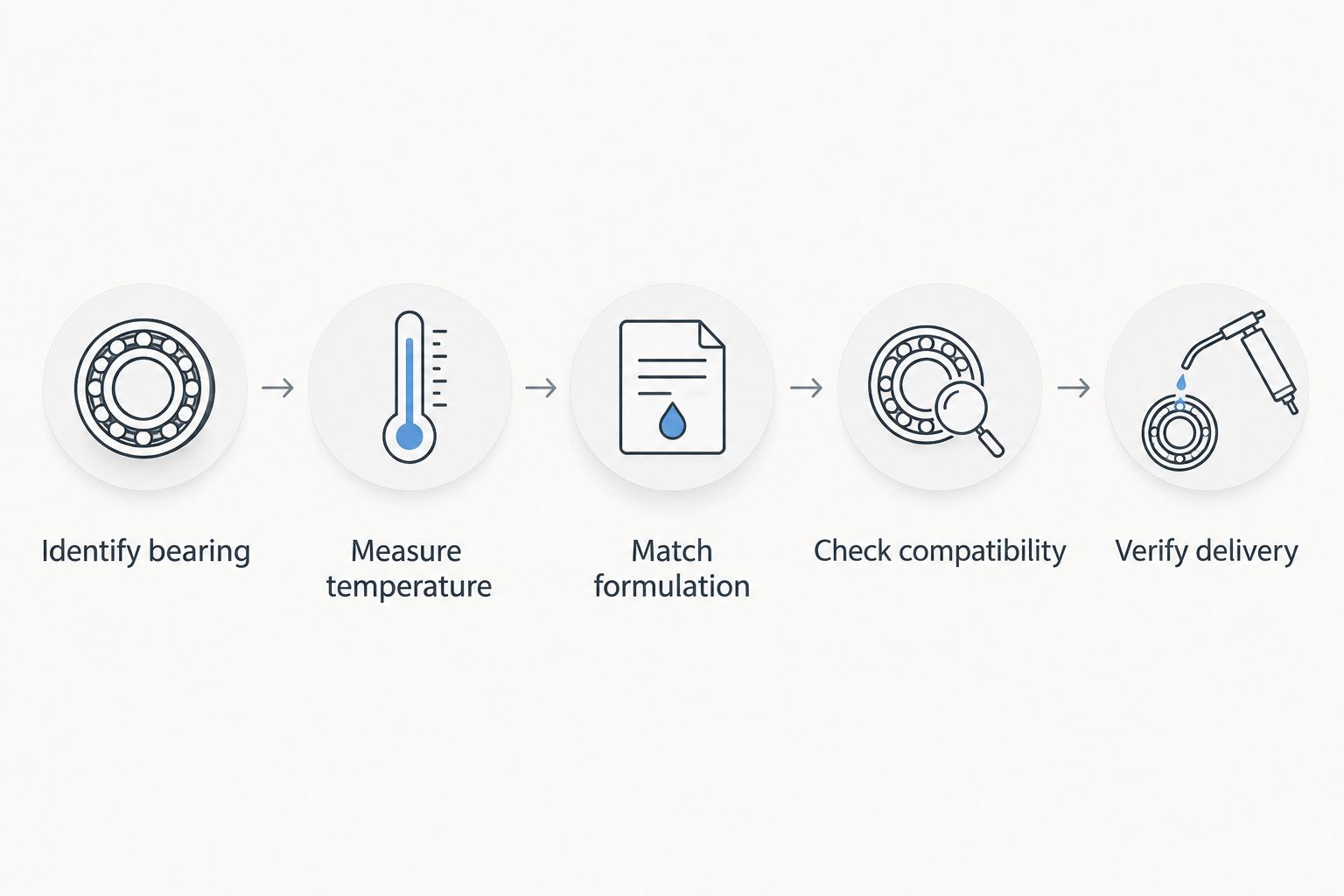
Turn the shortlist into a bearing specification
Before changing grease in 2026, assemble a bearing-level record. Keep this record separate from the furnace's process-temperature documentation.
- Identify bearing. Record the designation, bearing arrangement, seals, speed, and equipment manufacturer's lubrication instructions.
- Measure temperature. Record stabilized and transient readings at consistent locations. Identify whether each reading represents the housing or another measurement point.
- Match formulation. Compare base-oil viscosity, approved service temperature, load performance, consistency, and contamination resistance.
- Check compatibility. Obtain guidance for the actual old and new formulations, including the cleaning or purge procedure.
- Verify delivery. Confirm the grease reaches the bearing through the installed lines, fittings, and metering arrangement.
This sequence prevents a common selection error: choosing chemistry before defining the application. A technically suitable grease still fails its purpose if the lubrication system cannot deliver it.
Set relubrication from the application, not the label
No universal interval applies to all kiln and furnace bearings. Follow equipment guidance and adjust through a documented maintenance process using bearing condition, operating temperature, contamination, and lubricant observations.
A 2026 lubrication record should identify the exact grease, application point, replenishment quantity, interval, and inspection findings. Track changes consistently so a temperature increase is not confused with a changed measurement location or operating load.
Avoid using grease quantity as an improvised cooling method. Overfilling can increase churning and heat; inadequate supply can leave the contact surfaces without sufficient lubricant. Both problems require application-specific correction.
Check the delivery path before blaming the chemistry. A blocked line, damaged fitting, or incorrect metering setting can prevent the specified grease from reaching the bearing.
Which kiln bearing grease should you choose?
Start with synthetic-oil polyurea for a compatible heat-exposed rolling-bearing application; choose calcium sulfonate complex when verified load and water requirements take priority. Reserve PFPE/PTFE for approved exceptional exposure, and retain synthetic-oil lithium complex where an existing valid specification supports it.
Lubriloy is a source of industrial lubricants and greases for maintenance buyers specifying kiln and furnace bearing lubrication. Make the final selection from the formulation's documentation and the equipment requirements—not from a family ranking alone.
FAQ
What's the best high temperature grease for kiln bearings?
Synthetic-oil polyurea is the default candidate for compatible heat-exposed rolling bearings. Calcium sulfonate complex suits verified heavy-load and water-exposure requirements, while PFPE/PTFE belongs in approved exceptional thermal or chemical duties.
Should I choose kiln bearing grease using the furnace temperature?
No; select grease using the bearing's operating conditions, not furnace process temperature alone. Record temperature at a consistent measurement location and account for bearing speed, load, and contamination.
Does a higher dropping point mean a grease lasts longer in heat?
No; dropping point does not establish continuous operating temperature or lubricant life. ASTM D2265 measures dropping point, while useful service also depends on base-oil behavior and the operating conditions.
Is NLGI grade 2 a high-temperature rating?
No; NLGI grade 2 describes consistency, not thermal capability. Under ASTM D217, its worked penetration range is 265–295 tenths of a millimeter at 25°C.
Can I mix polyurea and lithium complex grease?
Do not mix them without guidance for the actual formulations. Compatibility depends on more than the thickener names, and an approved changeover can require removal of the existing lubricant.
When should I use PFPE/PTFE grease in furnace bearings?
Use PFPE/PTFE grease when the documented exposure requires it and the equipment permits the selected formulation. Establish a cleaning and conversion procedure before replacing conventional grease.
How often should I regrease kiln bearings?
Use the equipment manufacturer's application-specific guidance rather than a universal interval. Review bearing temperature, contamination, lubricant condition, and delivery performance through a documented maintenance process.
One last thing
Inspect the grease path before changing the grease. Confirm that the fitting, line, metering arrangement, and bearing entry point deliver lubricant as intended. Replacing chemistry cannot correct a bearing that receives no grease.